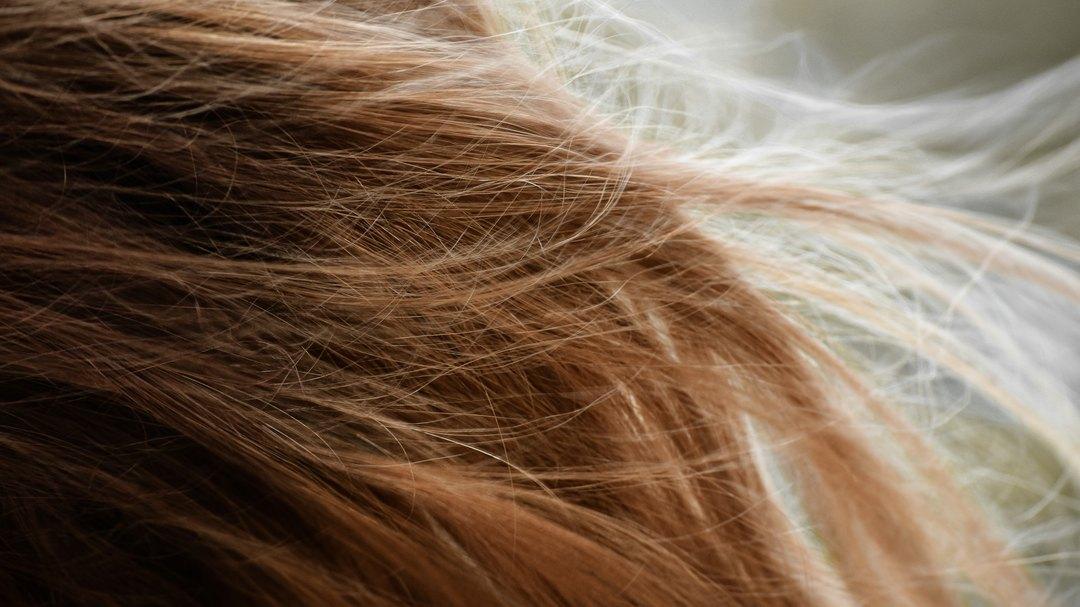
Frizz is hair that picked up water or friction unevenly, so some strands bend out of line with the ones around them. The fix depends on where it shows up. A halo of short hairs at the crown needs one answer, ends that puff up the minute you step outside need another, and frizz that's there before you've left the bathroom usually comes from the way your hair dried. Work out which kind you have, then change the one or two habits that feed it.
Which kind of frizz do you have
Check on a day when you've washed your hair and let it dry the way you normally do, and look in daylight.
- The halo. Short hairs stand up along the part and the hairline while the lengths lie flat. These are new hairs growing in, or hairs that snapped partway down.
- Humidity frizz. Your hair looks fine indoors and swells within an hour of a muggy walk.
- Dry ends. The roots are smooth, and the last few inches feel rough between your fingers and fan out.
- Drying frizz. It's there as soon as your hair is dry, whatever the weather is doing.
Most people have two of these at once. Start with the one you notice first in the mirror.
Humidity frizz
Hair takes up water from the air, and the strand swells as it does. The outer layer, the cuticle, swells too, and it does more of that work the wetter the air gets. Neighboring strands don't absorb at the same rate, so they swell and bend at slightly different moments, and the smooth outline you left the house with goes fuzzy at the edges.
A thin layer on the surface slows water going in and out. Leave-in conditioner, a light oil, or a cream with silicones or oils all do this to some degree. Timing matters more than the brand. Put it on while your hair is still wet, before it has started to dry and set, and work it through in sections so every part of the length gets some.
Glycerin pulls water toward itself. That helps on dry winter days and can work against you when the air is thick and sticky. If your hair frizzes more in summer with the same products, look for glycerin near the top of the ingredient list and save that product for drier weather.
Humidity frizz never goes to zero. On the muggiest days, a style that keeps the lengths together, like a braid or a low bun, will look smoother than anything you can put on loose hair.
Dry, frizzy ends
The ends are the oldest part of your hair. They've been through every brushing, every round of heat and every summer since they grew out of your scalp, and that wear roughs up the surface. A rough surface catches on the strands next to it and takes up water faster, so the ends frizz while the roots stay calm.
Give the lower half of your hair conditioner every time you wash, and add a mask once a week if the ends still feel like straw. Keep heat tools on low or medium with a heat protectant, since high heat wears the surface fastest.
If your ends feel mushy and stretch when they're wet, more conditioner won't help. Do the bend test instead. Take a wet strand and bend it gently. A strand that springs back is balanced. One that stretches and stays limp has had too much softening and could use a protein treatment. One that snaps has had too much protein, and plain conditioner is the better choice.
Split ends don't close up again. Trimming the worst half inch takes away the part that frizzes most, and the rest gets easier to manage.
Drying frizz
Most routines create this kind by accident, and it's the quickest to fix. Rubbing wet hair with a terry towel roughs up the surface and pulls apart strands that were lying together. Press the water out instead, or wrap your hair in the towel and leave it for a few minutes.
Then leave it alone. Every time you touch half-dry hair, you break up the sections that were setting, and each broken section dries as its own small cloud. With curls or waves, skip the brush once your hair is dry; detangle in the shower with conditioner still in, using a wide-tooth comb and starting from the ends. If you blow-dry, point the air down the length of the hair, from roots to ends, on a low or medium setting.
How you spread the product counts as much as which one you buy. There's more on that in Where Frizz Comes From.
The halo
No product will make short new hairs longer, and broken ones won't catch up with the length around them any faster. You can smooth them down and stop adding new ones. A little cream or gel on your fingertips, or on a clean toothbrush run along the part, holds them flat for the day.
At night, a satin or silk pillowcase cuts the friction a cotton one adds; Sleeping on Your Hair covers the rest.
Questions people ask
Can you get rid of frizzy hair permanently?
Not with everyday products. A salon smoothing treatment, such as a keratin treatment, can keep frizz down for a few months before it washes out and grows out, and it changes your natural texture while it lasts. For most people, frizz control is a routine you repeat every wash.
Why is my hair frizzy right after I wash it?
That's almost always drying frizz. The usual causes are a towel rub and products going on after the hair has started to dry. Fix those two first.
Is frizzy hair damaged?
Sometimes. Frizz that sits in the ends and feels rough usually means the surface is worn. Frizz that comes and goes with the weather, on hair that feels smooth on dry days, usually isn't damage.
Sources
- Gavazzoni Dias MFR. Hair cosmetics: an overview. International Journal of Trichology, 2015.
- The kinetics of moisture sorption by hair. International Journal of Cosmetic Science.
- American Academy of Dermatology. Tips for healthy hair.
- American Academy of Dermatology. 6 curly hair tips from dermatologists.