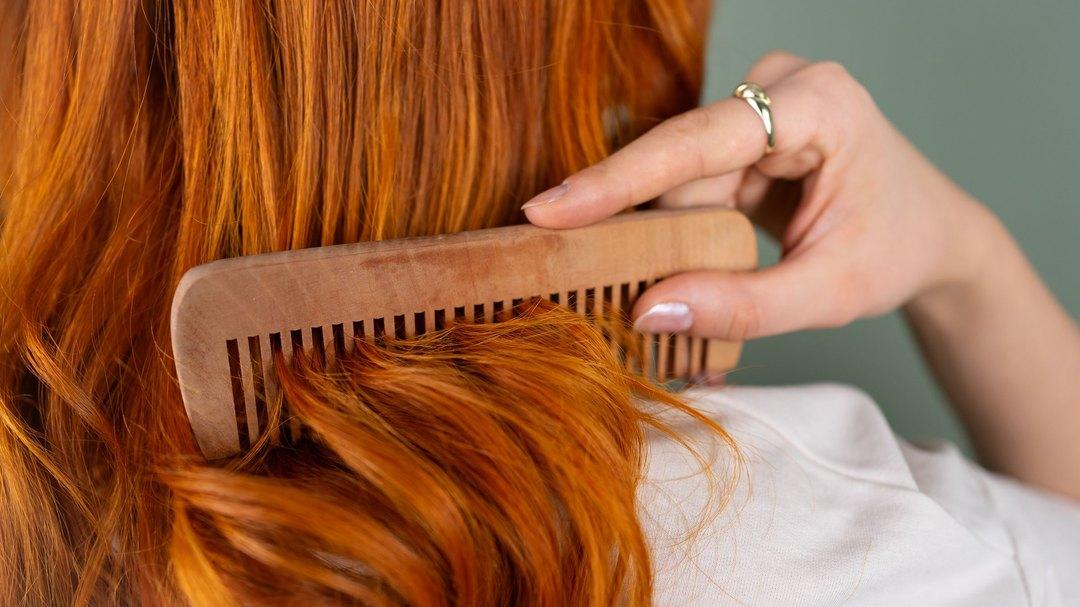
Hair breakage means strands snapping partway along their length, and the usual cause is handling, especially while hair is wet and knotted. To prevent it, detangle in sections from the ends up with conditioner in, press water out of your hair instead of rubbing it, and loosen any style that pulls on the same line of hair every day. Before you change anything, check that breakage is what you're seeing. Shed hairs fall out whole, and they need a different answer.
Is it breakage or shedding? Look at the ends
Collect the hairs from your brush and the shower drain over a day or two. Lay them on a sheet of paper in a color that contrasts with your hair, and look closely at both ends of each one.
- A long hair with a small white bulb at one end was shed. The bulb is keratin, and it held the hair in your scalp until it was ready to fall. Losing 50 to 100 of these a day is normal.
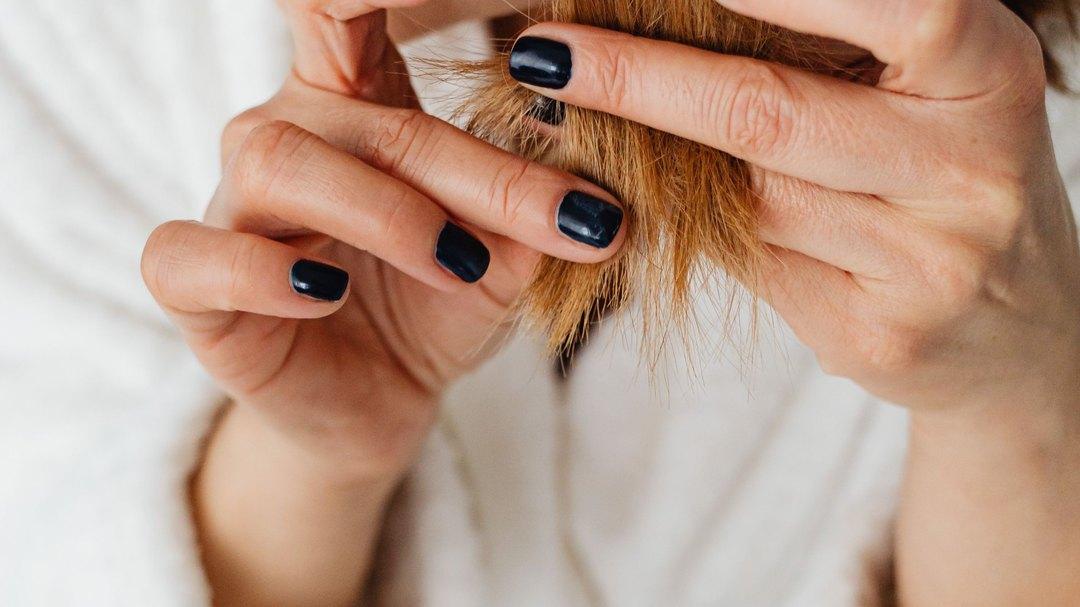
- A shorter piece with no bulb, blunt or frayed at both ends, broke.
Most piles have some of each. If yours is mostly short pieces, the rest of this page is for you. If it's mostly full-length hairs with bulbs, and there are more than you're used to seeing, or your part looks wider than it did, take it to a doctor. Gentler detangling won't answer that question.
Then look at your hair in the mirror. If short, broken pieces stick out at the height where your ponytail sits, start with the elastic. If they're scattered through the lengths, start with how you comb.
What causes hair breakage?
Combs and brushes snap hair at knots. A strand breaks when the comb runs into a tangle and keeps going, or when it meets the hair with a sharp tug instead of easing through. Hair that's been bleached or ironed hot is already weaker and gives way under less force; if that's your hair, How to Fix Damaged Hair covers the damage itself.
The other habits that break hair are everyday ones, like rubbing wet hair with a towel, brushing straight hair while it's still soaking, and wearing tight ponytails and buns held with bare rubber bands. A dryer or an iron on its highest setting belongs on the list, and so does booking color and a relaxer or perm close together. Hair has never needed 100 brush strokes a day, either.
You've probably been detangling the fast way, dragging a brush down from the roots until it stops snagging. Each snag it pulls through is a moment when a strand can snap, and on long, knotted hair that adds up quickly.
How to detangle without breaking your hair
Detangle with conditioner in, or with a leave-in on damp hair. Straight hair takes a comb better once it has dried a little; curly and coily hair is easier while it's still damp. Use a wide-tooth comb or a brush made for wet hair.
- Split your hair into four sections and clip three of them out of the way.
- Hold the section you're working on firmly, a few inches above the part you're combing. The pull stops at your hand instead of reaching the scalp.
- Comb the bottom two inches first, in short strokes. Move your hand and the comb up a little at a time.
- When the comb stops, stop. Back it out and tease the knot apart with your fingers, pulling strands out of it sideways, then comb again from below where the knot was.
This takes longer than pulling a brush through. On long or curly hair, give it ten minutes the first few times, less once the knots stop building up. If your hair is straight and rarely knots, skip the sections and give it a few gentle passes from the ends up. How to Brush Your Hair covers brushing dry and brushing in the shower, which follow different rules.
The rest of the routine
Press the water out with a towel, or wrap your hair in one for a few minutes, instead of rubbing. Wear it loosely pulled back with covered elastics, and move a ponytail higher or lower from day to day so the band doesn't sit on the same line of hair. Keep the dryer and the iron on the lowest setting that still works, and if you can, use hot tools once a week or less.
Use conditioner after every shampoo. Hair that comes out of the shower in knots is hair you'll end up pulling on.
Questions people ask
What is the best treatment for hair breakage?
No product reattaches hair that has snapped. Conditioner after every wash is the closest thing to a treatment, because hair that tangles less gets pulled less. If your hair breaks easily after bleach or a relaxer, a protein mask may help, and the bend test in How to Fix Damaged Hair tells you whether it will.
How long does it take to stop hair breakage?
Fresh breakage drops as soon as the handling changes, so the pile of short pieces in your brush should shrink first. The ones already on your head stay short, and the fuzz of broken ends along your part takes longer to fade.
Sources
- American Academy of Dermatology. Do you have hair loss or hair shedding?
- Cleveland Clinic. Telogen Effluvium: Symptoms, Causes, Treatment & Regrowth.
- American Academy of Dermatology. How to stop damaging your hair.
- Kamath YK, Robbins C. Hair breakage by combing and brushing: a comment on T. A. Evans and K. Park, A statistical analysis of hair breakage. II. Repeated grooming experiments. Journal of Cosmetic Science, 2011.