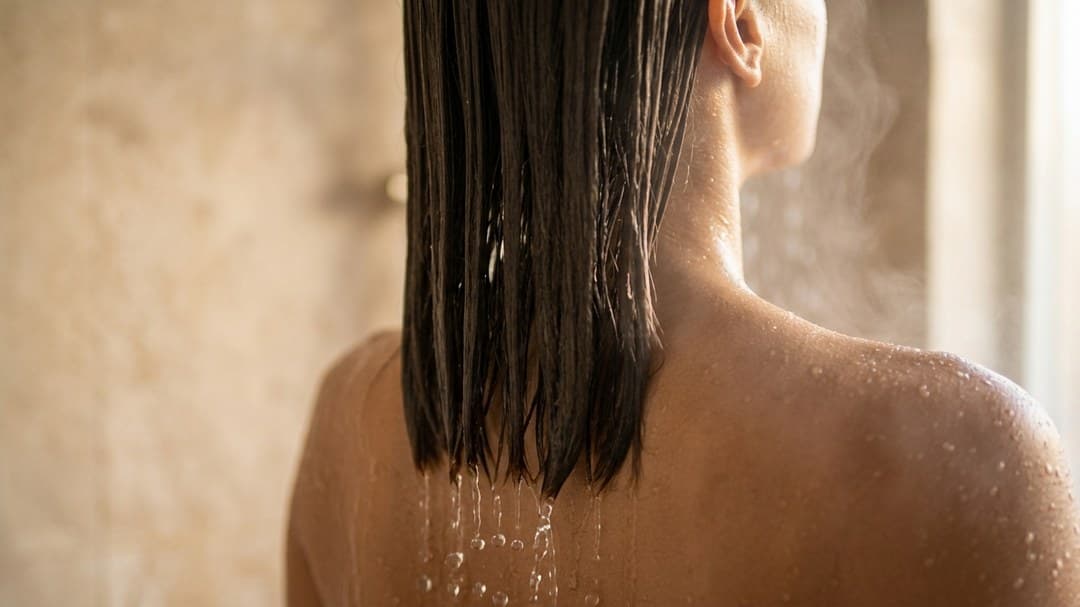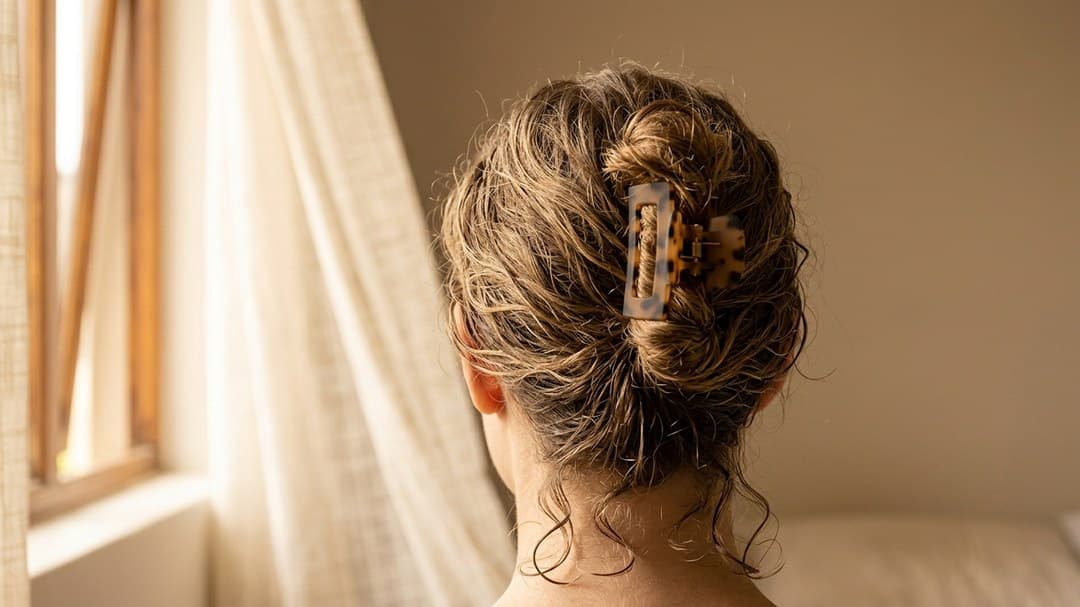
Almost everyone's hair looks better wet. Water breaks the hydrogen bonds that hold hair in its shape, and a good part of its stiffness rests on those. It turns pliable and heavy, sections stretch out and lie together. That is why so many people like their hair best at the moment it is still dripping.
Then the water evaporates, the bonds re-form — and they fix the hair in exactly the position it happened to be in. It is rather like musical chairs: a bond settles wherever it can reach, not where it would look best. If a section was lying any old way at that moment, that is how it sets. Frizz amounts to a few thousand strands that dried out of alignment, rather than a property your hair has.
Which means all of it is decided before the hair is dry. The job is to have the hair dry lying in one direction, rather than to weigh frizz down afterwards.
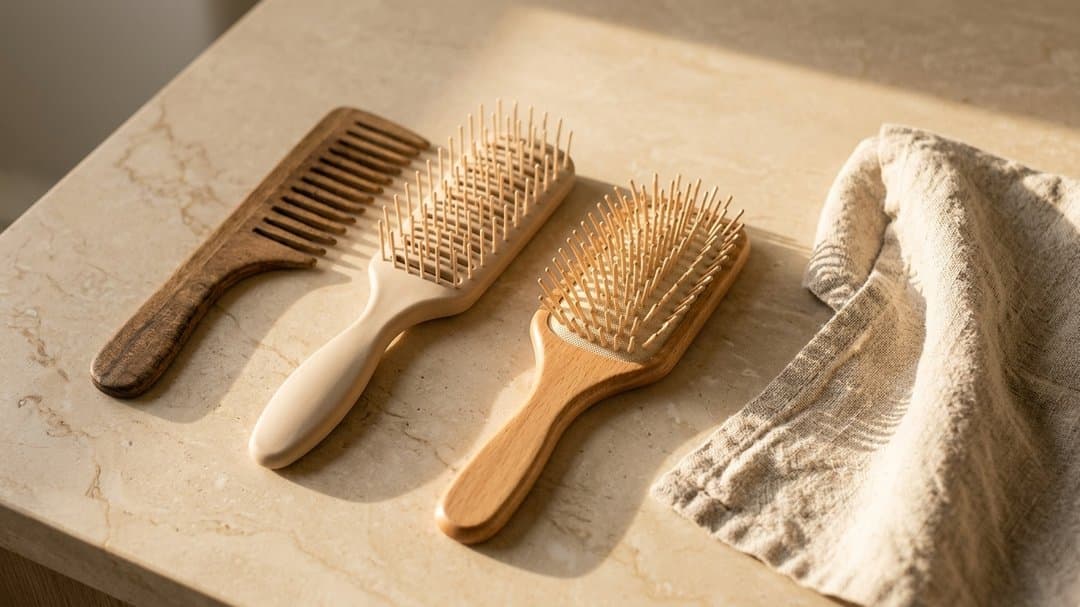
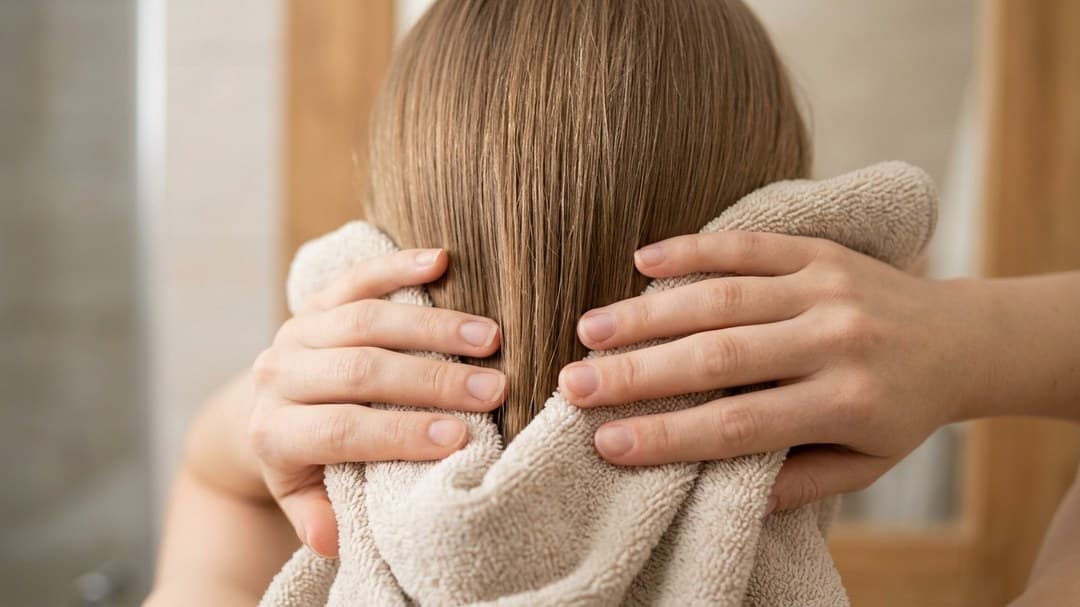
In practice, you draw product through small sections, one after another, with your fingers or a comb, rather than rubbing it over your whole head at once. It takes longer, and it is precisely what lines the strands up against each other. A fixative in a styling product holds that arrangement until the bonds have set, which is a different job from adding stiffness. Oil or a heavier cream on top acts as a screen against humidity in the air, which would otherwise take the arrangement apart again.
Hair always pulls back towards its own shape. The springier it is, the more it draws upwards, and length is visually lost. You can only stretch it with weight or tension — gathering it up gently while it dries, or adding a denser product. But there is a limit to that, as there is with a hair tie that stops coming back after a hundred stretches.
There won't be a perfect result every time; too much of it depends on the weather. But if you are going to change one thing, change how you distribute the product, not the product.