Clarifying shampoo is a deep-cleaning shampoo made to take off what slowly builds up on your hair between ordinary washes. Most of that is styling product like hairspray and gel, plus the film that silicone serums and rich leave-ins are designed to leave. Use it when your hair starts to feel coated, and follow it with conditioner every time, because it leaves the lengths rougher than your usual wash does.
What does clarifying shampoo remove?
Shampoos for dry or treated hair often carry a little conditioner of their own, and a clarifying shampoo skips it. It's built on the lauryl sulfates, among the strongest cleansers used in shampoo and the same ones that shampoos for oily hair rely on, and it takes oil and styling product off the hair thoroughly.
Sprays and gels leave a layer on the strand, and with daily use it piles up within about a week until your hair feels harsh and looks dull.
Conditioning products build up more quietly. Some conditioning ingredients cling to the cleanser in your shampoo and form a layer that holds out against the next wash, so a routine you haven't changed in months can start to feel heavy. Silicone serums and leave-ins add to it, since staying on the hair is what they're for.
Do you need a clarifying shampoo?
You probably do if something in your routine stays on your hair, such as a daily styling product, a silicone serum, an oil on the ends or dry shampoo between washes. Curls styled with gels, creams, oils or pomades often land here, and a clarifying wash before your usual moisturizing shampoo is a sensible step. Frequent swimmers pick up residue from pool water, and an occasional clarifying wash helps with that too.
You may have been reaching for a richer conditioner because your hair felt dull and heavy, then watching it make your hair heavier still. That loop often points to buildup.
If all you use is shampoo and a rinse-out conditioner, and your hair behaves, you can skip clarifying shampoo altogether.
Signs you need a clarifying shampoo
Check on a wash day, once your hair is dry and before any product goes on.
- Your hair feels waxy or coated between your fingers, even though it's clean.
- A product that worked for months has stopped, like a curl cream that now leaves curls flat.
- Your hair dries limp, and the roots go flat sooner than they used to.
- The lengths look dull in daylight right after a wash.
Two or more of these, along with something in your routine that stays on, is a good reason to clarify. One sign on its own usually has another cause.
How to use clarifying shampoo
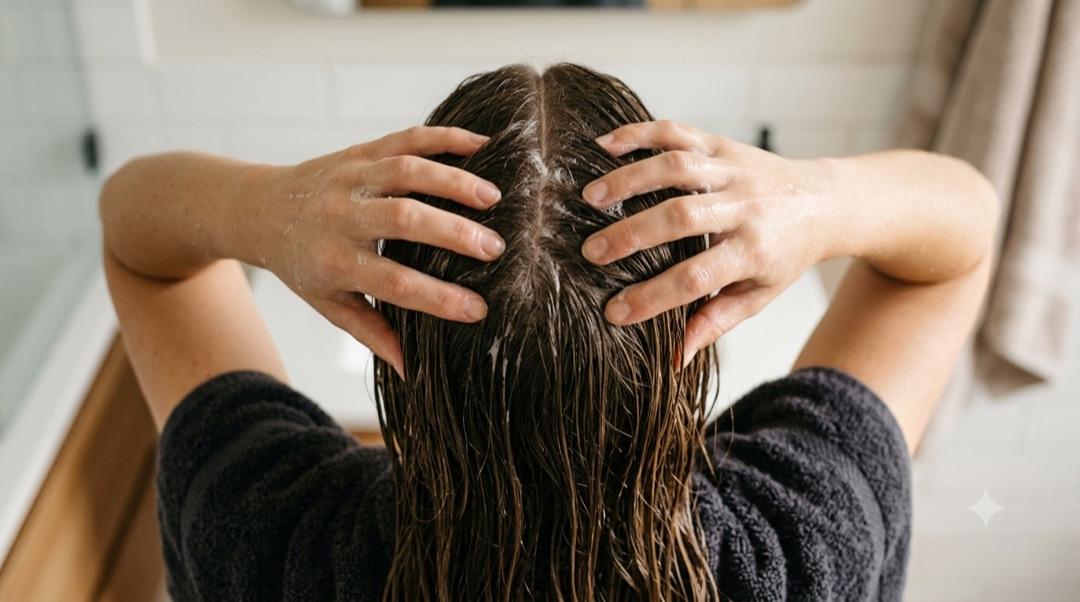
Work it into your scalp first, then down through the lengths. The gel and serum you're clearing went on the lengths, so this time the shampoo has to reach them too. If your hair still feels coated after you rinse, do a second round, and rinse for longer than you usually would.
How to tell if it worked
One wash gives you an answer if nothing else changes that day. Condition as usual, leave out every leave-on product for this one wash, let your hair dry the way it normally does, and look at it in daylight.
If it feels lighter and holds a shape again, buildup was the problem. Bring your products back one at a time, and clarify again when two of the signs return rather than on a fixed schedule.
If your hair looks and feels the same, buildup wasn't the cause, and more clarifying won't help. When Your Routine Stops Working goes through the other suspects, from hard water to a recent bleach.
Conditioner after clarifying shampoo
Hair stripped of all its oil feels harsh and tangles easily. A clarifying wash gets closer to that than any other wash, so conditioner afterward is part of the job. Put it on the lengths, all the way to the ends. Leave it for a few minutes before you rinse. If your hair curls, condition the full length, roots included.
Used every day, clarifying shampoo dries hair out, so keep the bottle for the days the signs show up. Colored and highlighted hair needs extra care with strong cleansers, and Shampoo for Color-Treated Hair explains when to reach for one and when to skip it.
Questions people ask
What's the difference between clarifying shampoo and regular shampoo?
Mostly strength. Regular shampoos often lead with a laureth sulfate, which cleans well and leaves hair in good condition. Clarifying shampoos lead with a lauryl sulfate, a harsher cleanser, and are made to leave as little as possible behind. The second or third line of the ingredient list tells you which kind you're holding.
Is there a gentle clarifying shampoo?
Plenty are sold as gentle, usually with a milder cleanser or added conditioning, which can suit dry or colored hair. Judge one by the one-wash check. If the coated feeling is gone, it was strong enough for your buildup. If it's still there, do a second round or switch to a standard formula.
Sources
- Draelos ZD. Essentials of hair care often neglected: hair cleansing. International Journal of Trichology, 2010.
- Gavazzoni Dias MFR. Hair cosmetics: an overview. International Journal of Trichology, 2015.
- American Academy of Dermatology. 6 curly hair tips from dermatologists.
- Cleveland Clinic. How to protect your hair from chlorine. 2026.