Most scalps can go without a scrub, because shampoo worked into the scalp with your fingertips already washes off dead skin and leftover product. A scalp scrub adds fine grains or a mild acid to loosen what's left. It's worth having if you use dry shampoo or root sprays most days and your roots still feel tacky after a normal wash, and it should stay on the shelf whenever your scalp is sore or flaking.
What builds up on your scalp
Your scalp sheds skin and makes oil every day, and anything you put on at the roots joins them. Dry shampoo is the usual suspect, since the powder sits on the skin until a wash takes it off, and root-lift sprays and oils settle there too. What Shampoo Is Actually For covers the ordinary wash that clears most of it.
If you've been piling on more dry shampoo because your roots feel heavy, the heaviness may be the dry shampoo. Using less is the cheaper fix, and How to Use Dry Shampoo goes through how.
Physical vs chemical scalp scrubs
Physical scrubs work by rubbing. Grains of sugar or ground seeds sit in a shampoo or gel, and as you massage, they knock dead skin and residue loose for the water to take. A federal law passed in 2015 took plastic microbeads out of rinse-off cosmetics, so the grains in a scrub you buy now are made of something else. Sugar and salt dissolve as you rinse. Ground seeds and shells don't, and in thick or curly hair they can hide near the roots.
Chemical scrubs use acids instead, usually glycolic acid or salicylic acid. The acid dissolves dead skin cells so they let go and wash away, and there's nothing to rub. If your skin turns pink at the slightest friction, a gentle acid is usually the kinder choice.
Glycolic acid and its relatives can make skin burn more easily in the sun, and FDA-recommended labeling advises sun protection while you use them and for a week after. The skin along your part is the patch that gets sun, so wear a hat on bright days that week.
How to use a scalp scrub
- Wet your hair until the water reaches your scalp.
- Part your hair into four sections with your fingers. Put a small amount on your fingertips and spread it along each part.
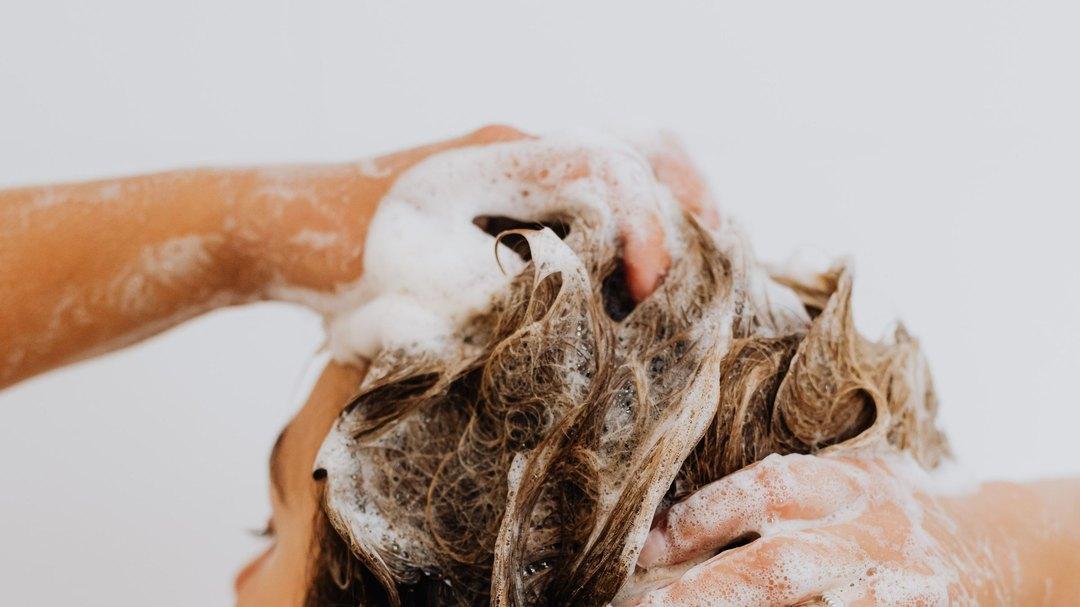
- Massage with the pads of your fingers in small circles for about 30 seconds per section, with light pressure and your nails off the skin.
- Rinse for longer than feels necessary, lifting the hair at the roots so the water gets underneath.
- Follow the label on shampoo, since some scrubs replace a wash and others go before one. Then condition your lengths as usual.
How often to use a scalp scrub
Start with once every two weeks. The harsher the scrub, the longer the gap between uses should be, so space a grainy one farther apart than a gentle acid.
It's easy to overdo it the first time, because the tingle feels like proof that it's working, and a look at your scalp the next day tells you whether it was too much. In daylight, part your hair in a few places and run your fingertips over the skin.
- It feels normal, looks its usual color, and your roots stay fresh a bit longer. Keep the schedule, and move to once a week only if the coated feeling comes back sooner.
- It's pink or tender, or it stings. That was too much. Wait until it settles, then go gentler next time, with less pressure or a mild acid in place of grains.
- New itching or flakes show up. Stop using it, and if it doesn't settle within a week or two, see a doctor.
Who should skip a scalp scrub
Skip it while your scalp is itchy or sunburned, and anywhere the skin is scratched or broken.
A flaky scalp should go to a doctor before it meets a scrub. Flakes have more than one possible cause, and scrubbing them away doesn't tell you which one you have.
Leave a few days between a scrub and any chemical service, from color to a relaxer, so freshly scrubbed skin isn't meeting strong chemicals the same week. If your skin tends to leave dark marks after a scrape or a breakout, go gentle here too, and stay away from coarse grains and strong acids.
Some scrubs are sold with promises about hair growth. Treat a scrub as a cleaning step and nothing more, and take shedding that's heavier than usual to a doctor.
Questions people ask
Should an exfoliating scalp scrub go on wet or dry hair?
Wet, for most of them. Water helps the product spread and lets grains glide over the scalp instead of dragging. A few acid treatments go on a dry scalp before a wash, and the label will say so.
Can you make a scalp exfoliating scrub with sugar?
You can. Stir a teaspoon of fine sugar into your usual shampoo, use it the same way, and do the same next-day check. Keep the sugar fine, since coarse crystals scratch.
Sources
- American Academy of Dermatology. How to safely exfoliate at home.
- American Academy of Dermatology. Tips for healthy hair.
- U.S. Food and Drug Administration. The Microbead-Free Waters Act: FAQs.
- U.S. Food and Drug Administration. Alpha hydroxy acids.