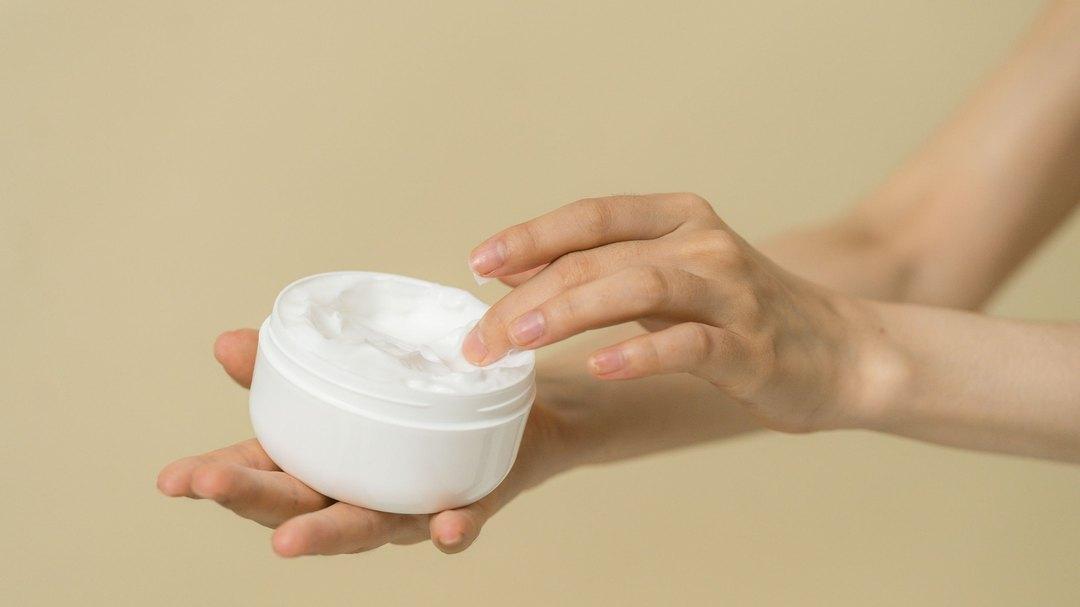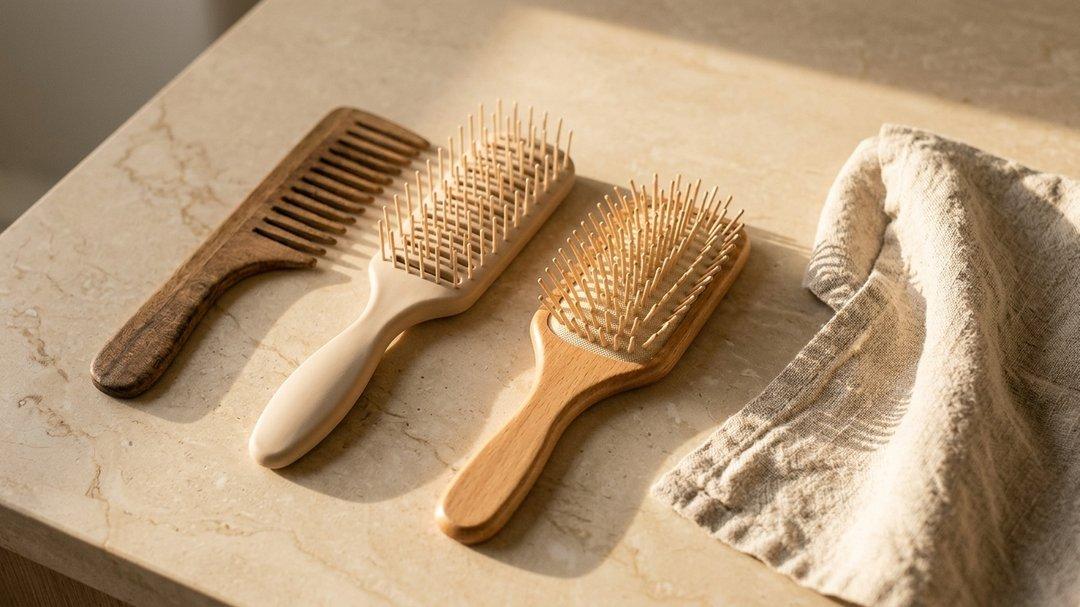
Castor oil leaves the bottle slowly, in a thick string, and your palms stay tacky after you've rubbed it in. That weight helps on dry, rough ends and as a treatment before you shampoo. It also means the oil clings, so most of the work is in getting it out again. The growth claims are a different matter, since there's no strong evidence that castor oil makes hair grow.
What castor oil does for your hair
Castor oil is made mainly of one fatty acid, ricinoleic acid, and it's unusually thick and sticky for an oil. On the lengths it behaves like other oils, with more grip. Oil spread over the strands lowers friction, so wet hair combs with less force and the ends split less often. There's some evidence, though not strong, that it makes hair shinier.
Its safety record as a cosmetic ingredient is good. In human tests it rarely irritated skin or caused allergic reactions, though people who already had certain skin conditions reacted more often.
Does castor oil make hair grow?
People have rubbed castor oil into scalps and eyebrows for generations in the hope that it would, and the evidence never caught up with the habit. A systematic review of hair oil studies found no strong evidence that castor oil helps hair grow. If you're seeing more hair in the drain than usual, take that to a doctor.
The stickiness that helps on the ends works against you at the roots. Castor oil left near the scalp can make clean hair look flat and stringy by the next morning, and it takes more shampoo to lift than a lighter oil.
Long hair needs one more warning. In a published case, a young woman put castor and coconut oil on before washing, the first time she had used castor oil, and her hair matted into a dense tangle as it dried. The authors blamed the oil's thickness together with the length of her hair, and they note that felted hair like that can't be untangled and has to be cut. It's a single case, and it's still a good reason to keep the amount small and the hair aligned.
How to apply castor oil to hair
Thin it first. One part castor oil mixed with two or three parts of a lighter oil you already like spreads further, sits lighter and rinses out more easily.
- Detangle your hair while it's dry, so the oil doesn't glue knots together.
- For shoulder-length hair, warm about a teaspoon of the mix between your palms and press it into the bottom third of your hair, working in sections.
- Leave it for half an hour to a couple of hours, with your hair hanging loose or in a loose braid. Don't pile it up on top of your head.
- Wash it out using the steps below.
As a leave-in on dry hair, use a drop or two of the mix, on the very ends only.
How to wash castor oil out of your hair
Start before the water. Put a little shampoo onto the oiled lengths while they're still dry and work it in. Then add water a splash at a time until it lathers, and rinse. Keep long hair hanging down the whole time, and squeeze the shampoo through the lengths rather than scrubbing them in circles on top of your head.
Shampoo again, the normal way, with the lather on your scalp. The second round is the one that clears what the first one loosened; What Shampoo Is For covers why. Condition the ends afterward.
Check once your hair has dried. Pinch a small section of the ends between your thumb and finger and slide down to the tips. If your fingers drag or come away tacky, or the ends look darker and stuck together in strands, some oil is still in there. Next time, use less, or add a third round of shampoo.
Questions people ask
Can you leave castor oil in your hair overnight?
On the lengths, yes, if you've thinned it with a lighter oil and your hair is in a loose braid. Lay an old towel over the pillow, since the oil transfers onto fabric. Wash it out in the morning using the shampoo-before-water method above.
Is castor oil good for dry ends?
Used sparingly, yes. A drop or two of the thinned mix on the last inch or so makes rough ends feel smoother and helps them hold together. If they still feel rough after that, try a conditioning mask once a week before you add more oil.
Sources
- Cosmetic Ingredient Review Expert Panel. Final report on the safety assessment of Ricinus Communis (Castor) Seed Oil, Hydrogenated Castor Oil, Glyceryl Ricinoleate and related ingredients. International Journal of Toxicology, 2007.
- Phong C, Lee V, Yale K, Sung C, Mesinkovska N. Coconut, castor, and argan oil for hair in skin of color patients: a systematic review. Journal of Drugs in Dermatology, 2022.
- Maduri VR, Vedachalam A, Kiruthika S. "Castor Oil" – The Culprit of Acute Hair Felting. International Journal of Trichology, 2017.
- Gavazzoni Dias MFR. Hair cosmetics: an overview. International Journal of Trichology, 2015.