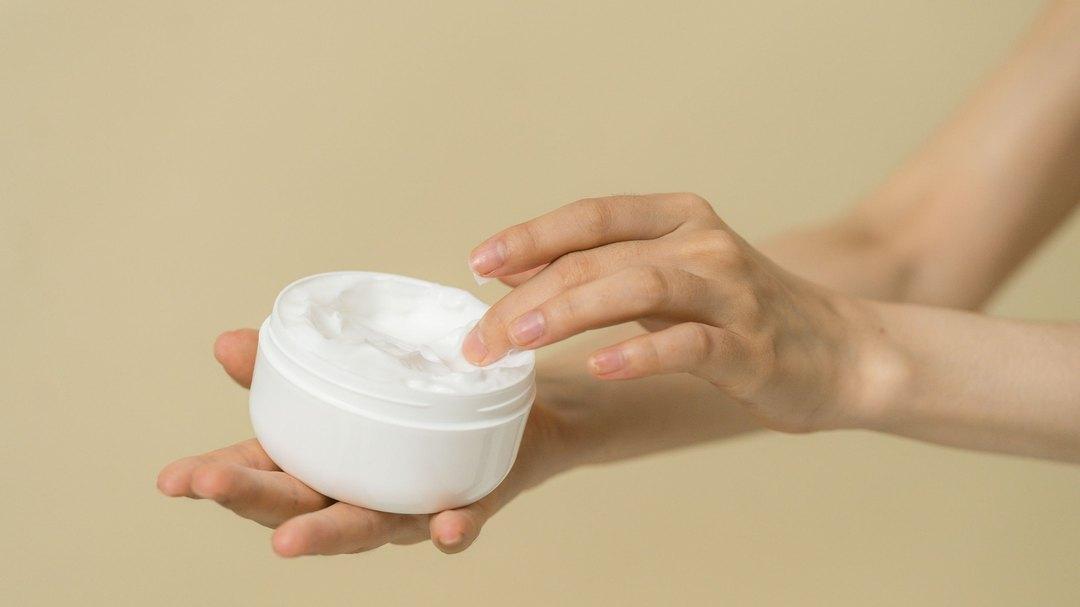
When a conditioner sits in a soft peak on your palm and doesn't run between your fingers, part of the reason is cetyl alcohol, a waxy fatty alcohol. It shares a word with the alcohol in hairspray and not much else. That one is ethanol, a thin liquid that evaporates fast, while cetyl alcohol is a soft white solid. It's safe in hair products, and reactions to it are rare.
What is cetyl alcohol?
Cetyl alcohol belongs to the fatty alcohols, a family that also includes stearyl and behenyl alcohol. Cetearyl alcohol is a blend of cetyl and stearyl. In a conditioner these are bodying agents and thickeners, part of what turns water and the conditioning ingredients into a cream that stays where you put it on wet hair.
If you've put a conditioner back on the shelf because "alcohol" showed up near the top of its ingredient list, look again at the word in front of it. In a conditioner, it's usually one of these.
Fatty alcohol vs drying alcohol
On a cosmetic label, the word alcohol on its own means ethyl alcohol, also called ethanol. SD alcohol followed by a number, such as SD alcohol 40, is ethyl alcohol with something added to make it undrinkable, and alcohol denat. on a label is denatured alcohol too. Isopropyl alcohol is another of the short, thin ones.
These short-chain alcohols evaporate quickly, which is why you'll find them in many hairsprays and gels, where the product needs to dry fast and set. They're the alcohols people have in mind when they say alcohol dries hair out. The fatty alcohols act quite differently on skin, and they don't evaporate.
How to read alcohol on a hair product label
Look at the word right in front of "alcohol," and sort it.
- A long fatty name. Cetyl, stearyl, cetearyl, behenyl or myristyl. That's a fatty alcohol, part of what makes the product creamy, and there's nothing to avoid, wherever it sits on the list.
- Nothing, or a short word. Alcohol, alcohol denat., SD alcohol with a number, ethanol or isopropyl alcohol. That's the quick-drying kind. In a hairspray it's expected. In a leave-in or a cream you put on dry ends every day, it's worth noticing, and if those ends feel rough and catch on your fingers by the second day, try a formula that leaves it out or puts it further down.
- Anything else ending in alcohol, such as benzyl alcohol. It's in neither group, so look it up on its own.
Names that don't end in alcohol at all, like ceteareth-20, are different ingredients, and the rule doesn't cover them.
If a product with none of the short-chain kind still leaves your hair rough, the alcohol wasn't the problem. How to Fix Dry Hair goes through the more likely causes, in the order they're worth fixing.
Is cetearyl alcohol bad for hair?
No. The Cosmetic Ingredient Review panel assessed cetearyl, cetyl, behenyl and myristyl alcohol along with a close relative, and concluded that all of them are safe as cosmetic ingredients the way they're used. In tests on people's skin, products containing cetyl alcohol caused no irritation and no allergic reactions, and a cream made with cetearyl alcohol produced no positive reactions either. A rinse-out conditioner also spends only a few minutes on your hair before it goes down the drain.
Cetyl alcohol allergy
Allergy to cetyl and stearyl alcohol has been reported for decades, and it's uncommon. In one group of 1,374 people with eczema who were patch-tested, 11 reacted to a mix of cetyl and stearyl alcohol. Impurities in some commercial grades may be behind part of that. Emulsifiers like these are a concern mainly in moisturizers for dry or eczema-prone skin, which stay on for hours.
If the skin along your hairline, around your ears or on the back of your neck turns red and itchy after you start a new conditioner, stop using it and see whether it settles. If it doesn't, or it keeps coming back, see a doctor. A patch test can show which ingredient you're reacting to, which saves you from guessing across every bottle in the shower.
If you've used conditioners with fatty alcohols for years without a reaction, you can stop checking labels for them.
Questions people ask
Can an alcohol-free product contain cetyl alcohol?
Yes. A product labeled alcohol-free can still contain cetyl or cetearyl alcohol. The claim refers to ethyl alcohol, and fatty alcohols don't act on skin the way ethyl alcohol does.
Is cetyl alcohol the same as cetearyl alcohol?
Close. Cetearyl alcohol is cetyl and stearyl alcohol blended together, and both are fatty alcohols that thicken a product. On a label, treat them the same way.
Sources
- U.S. Food and Drug Administration. "Alcohol Free".
- Cosmetic Ingredient Review. Final Report on the Safety Assessment of Cetearyl Alcohol, Cetyl Alcohol, Isostearyl Alcohol, Myristyl Alcohol, and Behenyl Alcohol. Journal of the American College of Toxicology, 1988.
- D'Souza P, Rathi SK. Shampoo and conditioners: What a dermatologist should know?. Indian Journal of Dermatology, 2015.
- Hannuksela M. Skin contact allergy to emulsifiers. International Journal of Cosmetic Science, 1988.