This browser is too old to run Hair Explained

Update your device's software, or open hairexplained.io in an up-to-date Safari or Chrome. Nothing on this page will work until then.

  1. Home
  2. Blog
  3. Heat Styling
Heat Styling

2 min read

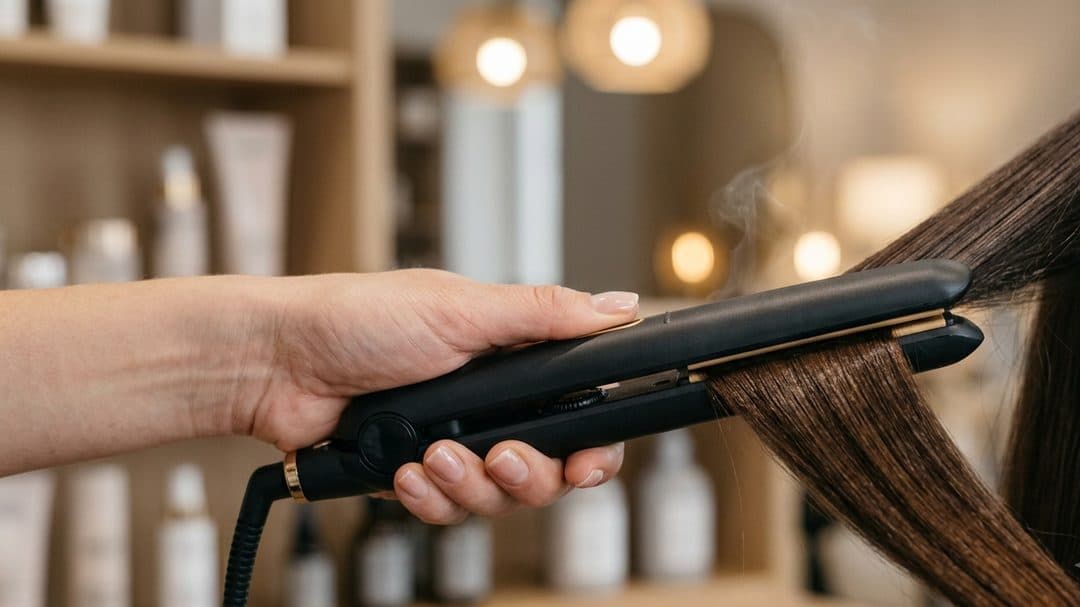
Section, clamp, pull, pull again. By the third use you can feel it: the bottom inch on curly hair goes a little crunchy, and the midshaft on straight hair catches when the comb meets it. Cross-type styling does that. A flat iron on curly hair needs more passes to lie flat, and a curling iron on straight hair needs sustained heat to hold a bend. The same section ends up under the tool longer than it would in a routine matched to its natural shape.

The mistake starts one step earlier. The dryer attachment is cross-type too. A diffuser spreads airflow so the curl pattern dries without being blown apart, which is what a curly client should have on the dryer before a flat iron comes out. A concentrator narrows the flow for a brush to stretch and smooth straight hair. A concentrator on curls will lift the pattern into frizz before any plate touches it; a diffuser on straight hair just stands you there warming the air.

Damp hair under a hot plate makes a quiet hissing sound for a reason. Water still inside the strand vaporizes and expands faster than it can escape, and that pressure forms microscopic blisters that show up as breakage and roughness later. Dry the strand fully before any iron touches it. It's the easiest rule to skip, and among the most expensive.

What a heat protectant does is plainer than the bottle suggests. The film reduces friction so the plate glides instead of grabbing the surface. It slows how fast heat crosses into the strand, so the protein inside is not hit all at once. And it lets the plate meet the hair evenly, so no single spot takes the full hit. Slowing the heat is one part of the work, not the whole shield the bottle sells.

Temperature matters more than the tool's max setting. Fine or already fragile hair sits around 250 to 270°F, with 330°F as the ceiling. Thick or coarse hair sits in the 350 to 380°F band. One pass per section is the target, two is acceptable when a piece resists, and three is the line you do not cross.

Cross-type compounds heat per session, which is the whole reason recovery has to be tighter than same-type. A bond-repair mask every 1 to 2 weeks is the cadence that matches what the strand has been taking. Two to four weeks is the band for someone styling with the right tool for her hair. Your strand counts heat a little differently, and it's worth accounting for that.
Recommended reading

  • 1 min read

    How to brush dry hair

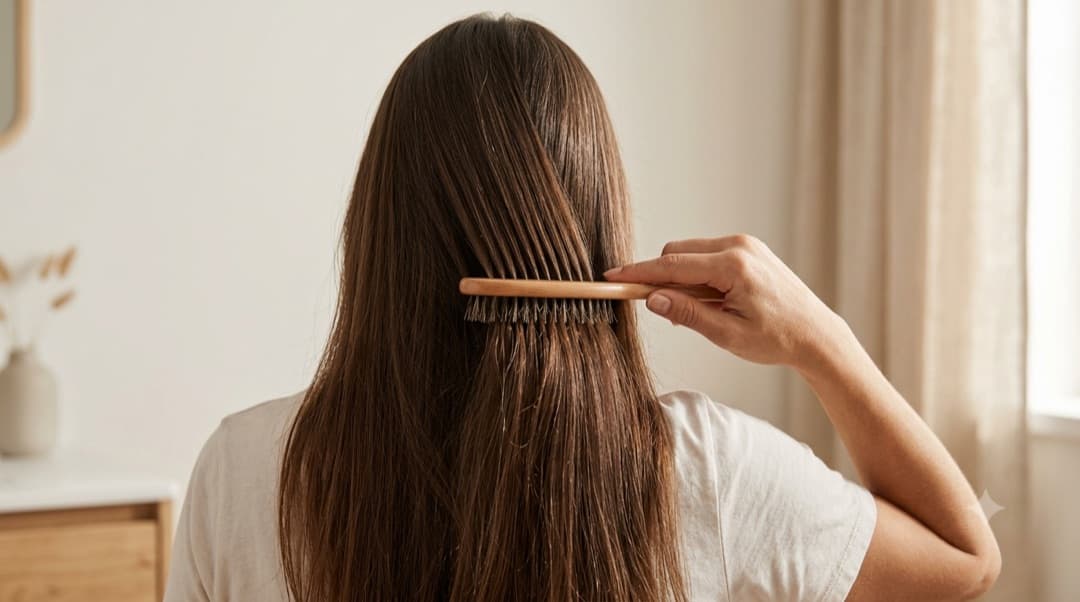
    A few gentle minutes of daily brushing smooths the surface and clears the scalp. Start at the ends, work up slowly, and go lightly when hair is fragile.

  • 2 min read

    Moisture Overload Signs

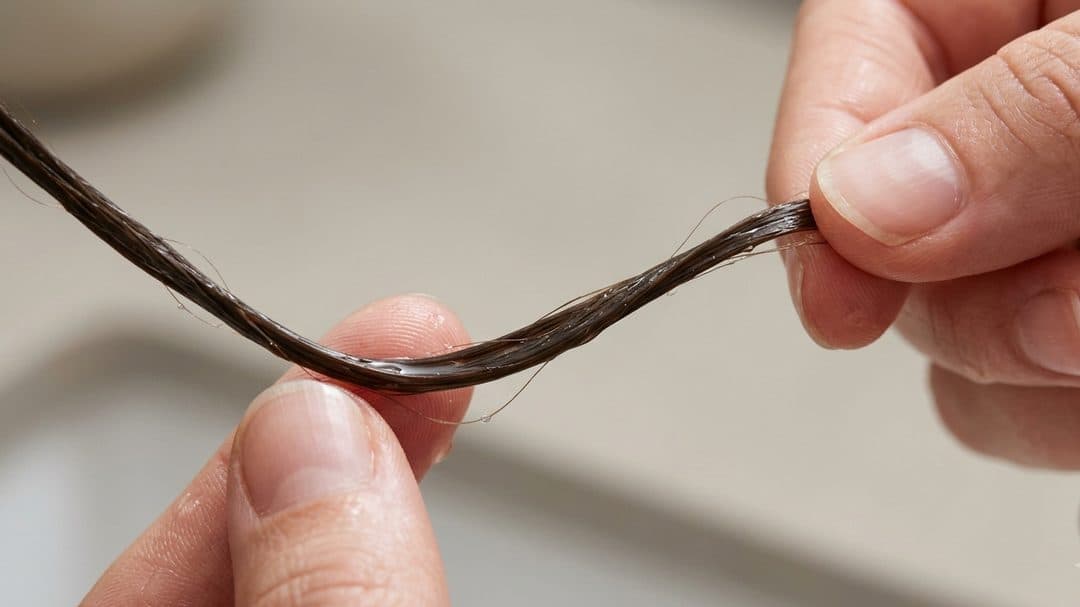
    Limp, rubbery strands that stretch instead of snapping mean moisture overload, not too little. The bend test that reveals it, and a two-to-three-week reset to rebalance protein and moisture.

  • 2 min read

    Actually Oily Scalp

    Most oily scalps are oil migrating down the strand, not overproduction. How to tell the difference, why washing less rarely helps, and the short routine that actually does.

  • 2 min read

    Pool Swimmer Hair

    The biggest fix for pool hair happens before you get in: pre-wet, add a barrier, and strip mineral buildup weekly. Why that green tint is copper, not chlorine.

Ready to Transform Your Hair Routine?

Take a short quiz and get a personalized hair care based on science, not guesswork.

Start Now
Community member avatarCommunity member avatarCommunity member avatar

10,000+

people already signed up

App preview on smartphone

Hair, Explained uses cookies for analytics and advertising

Ad and analytics cookies are on by default. Turn them off in Cookie Preferences. See our Cookie Policy.

Advertising cookies share your activity with our ad partners to measure our campaigns and show you more relevant ads. Advertising and analytics cookies are both on by default, and you can switch either off anytime in Cookie Preferences. See our Cookie Policy.

  • How It Works
  • Features
  • About Us
Sign In
Start Now
App StoreGoogle Play
  • How It Works
  • Features
  • About Us
Sign InStart Now

Personalized hair care based on science

© 2026 Hair Explained INC. All rights reserved.

200 Winchester Circle, G24
Los Gatos, California 95032, United States
+1 408-786-9745 · support@hairexplained.io

Explore

  • How It Works
  • Features
  • About Us

Help

  • Contact Us
  • Help Center

Legal

  • Privacy Policy
  • Terms of Service
  • Cookie Policy
  • Instagram

App StoreGoogle Play

Hair Explained provides general, cosmetic hair-care guidance only. It does not provide medical advice, diagnosis or treatment and is not a substitute for consultation with a doctor or other healthcare professional. Always seek professional medical advice if you have concerns about your scalp, skin, hair loss, or other health issues.

Advertising and analytics cookies and similar technologies are on by default, and the advertising ones share your activity with our ad partners. You can switch either off at any time in . Learn more in our Cookie Policy.